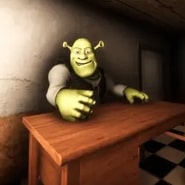
You draw a card, glance at the pips scattered across it, and roll — the numbers either line up with what the clown is holding or they don’t, and there’s no version of Unlikely where that tension goes away. It’s a small, sharp little game built around a single loop of matching dice, and it doesn’t pretend to be anything bigger than that.
| Genre |
Dice and card mini-game |
| Setting |
A single room, one dealer, five rounds |
| Core loop |
Match dice values from drawn cards for points |
| Win condition |
Reach at least 10 points in every round |
The Dice-and-Card Loop Inside Unlikely
Every round starts the same way: a card comes up showing a pattern of dice, and matching that pattern earns a point. It sounds almost too simple when you say it out loud, but the game leans hard into how quickly a good run can turn sour. Five rounds is not a lot of runway, and Unlikely never gives you a cushion to fall back on when the dice stop cooperating.
What separates a comfortable round from a nightmare one is timing more than skill. You can’t force a match that isn’t there, and the game knows it — the clown across the table just watches, waiting for the numbers to fail you. There’s a rhythm to reading each card fast enough to react before the round clock closes in.
Players who come in expecting a puzzle usually walk away disappointed, because this is closer to a nerve test dressed up as a card game. The appeal is in how fast a session runs and how often you’ll want to reset for one more shot at those five rounds.
Falling Short of Ten Points
Ten points is the number that decides everything in Unlikely, and missing it in any single round ends the run immediately — the clown doesn’t wait for a second chance. New players tend to treat early rounds casually, assuming the threshold is generous, and get caught off guard when round two or three punishes that assumption.
- Watch the card the moment it flips, not after — reaction time matters more than pattern memorization
- Don’t chase perfect matches when a partial one still counts toward the round
- Treat every round as if it’s the one that could end the session, because one of them will
The scoring threshold stays fixed across all five rounds, which is part of what makes the later ones feel heavier even though nothing mechanically changes. It’s the accumulated pressure, not new rules, that does the work.
What the Community Says About This Jam Format
Unlikely started life as a jam entry, and that history shows in exactly the way players talk about it online — short sessions, one clean idea, and a willingness to end abruptly rather than pad things out. Some players call it a “point run” game in forum threads, a shorthand for the format’s all-or-nothing five-round structure.
The most common criticism is length: once you’ve cleared it or lost to the clown a few times, there isn’t much left to discover. That’s a fair complaint, and it’s one the format doesn’t try to hide from. What keeps people coming back anyway is how replayable a two-minute loop can be when the stakes reset every single time.
Compared to longer horror-adjacent browser titles, Unlikely trades depth for immediacy, and most people who enjoy it know exactly what they’re signing up for before the first card flips.
Common Questions About Unlikely
How many rounds does Unlikely have?
There are five rounds total, and each one has to be cleared on its own terms before the next begins.
What happens if you don’t reach 10 points in a round?
Falling short of the threshold ends the session immediately — the clown claims the loss, and there’s no partial credit carried over.
Is Unlikely about strategy or luck?
It leans heavily on luck since the dice patterns are random, but reading each card quickly and reacting without hesitation is the closest thing to a skill the game rewards.
Unlikely doesn’t need more than five rounds and a hungry clown to make its point — the whole thing lives or dies on whether that next card matches, and that’s precisely why people keep drawing one more.