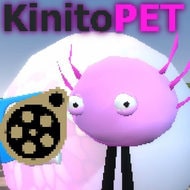
KinitoPET looks like a nostalgic desktop toy from the early 2000s, but it plays like a trap closing slowly enough that most players don’t notice until it’s already shut. Behind the cheerful colors and the friendly voice is a game far more interested in unsettling you than entertaining you in any conventional sense.
The Desktop That Pretends to Be Yours
The entire game runs as a simulated computer desktop, complete with a browser, a chat window, and a couple of working mini-games sitting in the corner like they belong there. It’s a convincing enough illusion that new players sometimes forget they’re inside KinitoPET at all, right up until something on that fake desktop reacts to them directly.
That framing device is doing more work than it looks like. Every window, every fake error, every popup is scripted, but the desktop metaphor makes each one feel like an intrusion into a space the player assumes is theirs.
It’s a slow build by design. The horror doesn’t announce itself in the opening minutes — it accumulates.
Kinito’s First Questions Are Not Small Talk
After hatching from an egg animation, Kinito introduces itself and starts asking questions — a favorite color, a wished-for superpower, the player’s actual name. On a first playthrough these read as harmless character-building, the kind of thing any virtual pet game might ask.
They aren’t harmless. Later sequences call back directly to answers given here, and that callback is precisely what makes the early chat feel retroactively invasive rather than cute. Players who go back for a second run tend to answer more cautiously, which the community half-jokingly treats as a rite of passage.
Minesweeper and 3D Pinball Hiding in Plain Sight in KinitoPET
Sitting quietly on the simulated desktop are fully functional versions of Minesweeper and 3D Pinball, playable with the same rules as their old Windows counterparts. They’re not required for progress, but plenty of players sink real time into them before ever clicking on Kinito’s icon, partly out of curiosity and partly because the normalcy of a working Minesweeper board is oddly comforting compared to what’s coming.
That comfort is temporary. The presence of two completely ordinary, nostalgic little games only sharpens the wrongness of everything else happening around them.
The Web Browser Sequence and the Pop-Up Ad Trap
Opening the in-game browser and clicking almost any page triggers an error window, quickly followed by a flood of pop-up ads, all branded with Kinito’s face, overwhelming the screen faster than a player can close them. It’s a deliberately chaotic sequence, and it’s one of the clearest moments where KinitoPET breaks from horror pacing into something closer to dark comedy.
Surviving the Hide and Seek Stage
Partway through, Kinito shifts from secretary to active hunter during a dedicated hide-and-seek stage, and this is where the tone shift becomes impossible to ignore. Up to that point Kinito has been managing emails and asking questions; here it’s actively looking for the player, and getting caught carries real consequences for how the run proceeds.
This stage is also where the pixel art style and the sound design do the most work — footsteps and ambient audio cues matter more here than in any other section, and missing them tends to end badly.
What the Mysterious USB Actually Unlocks in KinitoPET
A specific item, the Mysterious USB, connects to a separate encounter involving an entity referred to as Retro Shadow the World, and using it opens up additional content tied to that fight. It’s an optional thread rather than a required story beat, which is typical of how the game layers extra lore for players willing to dig.
Sam, Jade, and Who Else Is Trapped
Other characters surface as the story deepens — Sam and Jade among them — and both are heavily implied to be earlier visitors who never made it out of Kinito’s world. Their distorted appearances and fragmented dialogue are some of the more disturbing character work in the game, precisely because they read as former players rather than scripted monsters.
The Blue Screen Moment
The blue screen sequence is a single scripted beat where the screen tints entirely blue with no warning animation, and for a stretch of several seconds the player loses the ability to move while the game holds that image. It’s brief, it’s simple, and it’s one of the most talked-about individual moments in the entire game specifically because of how little it actually does mechanically — the tension comes entirely from the silence and the loss of control, not from any visible threat.
Chapter Select and Chasing Every Ending in KinitoPET
Reaching any one of the multiple endings unlocks chapter select, letting players revisit specific sections without replaying the whole game from the egg-hatching opening. This matters a lot for anyone chasing every ending, since a late-game choice — including a last-second decision near the finale — branches the story toward a bad ending where the player stays trapped with Kinito permanently, or toward one of the calmer regular endings where Kinito even sings a short song before the credits.
Skipping the lengthy password-entry opening is possible by holding shift and space at the same time, a workaround the community discovered and now treats as essential knowledge for repeat playthroughs, since the intro accepts any text as a valid password anyway.
What Players Argue About Most
The long opening cutscene and its repeated password prompt are the most commonly criticized parts of KinitoPET, especially before players learn the skip trick — it’s a rough first impression for a game that otherwise paces its horror carefully. Some players also point out that jumpscares are used sparingly enough that people expecting constant scares are sometimes caught off guard by how much of the runtime is quiet, dialogue-driven unease instead.
Even with that friction, the reaction across most communities leans strongly positive, with players consistently pointing to the character work around Kinito itself — equal parts charming and threatening — as the reason the game sticks with them well after the credits roll.
Whether a player’s chasing the true ending, poking around Retro Shadow the World with the Mysterious USB, or just replaying the hide-and-seek stage to catch a sound cue they missed, KinitoPET keeps circling back to the same unsettling core idea — the friendlier Kinito sounds, the less that should be trusted.